The Next Era of Luxury Will Be Built on Operational Intelligence
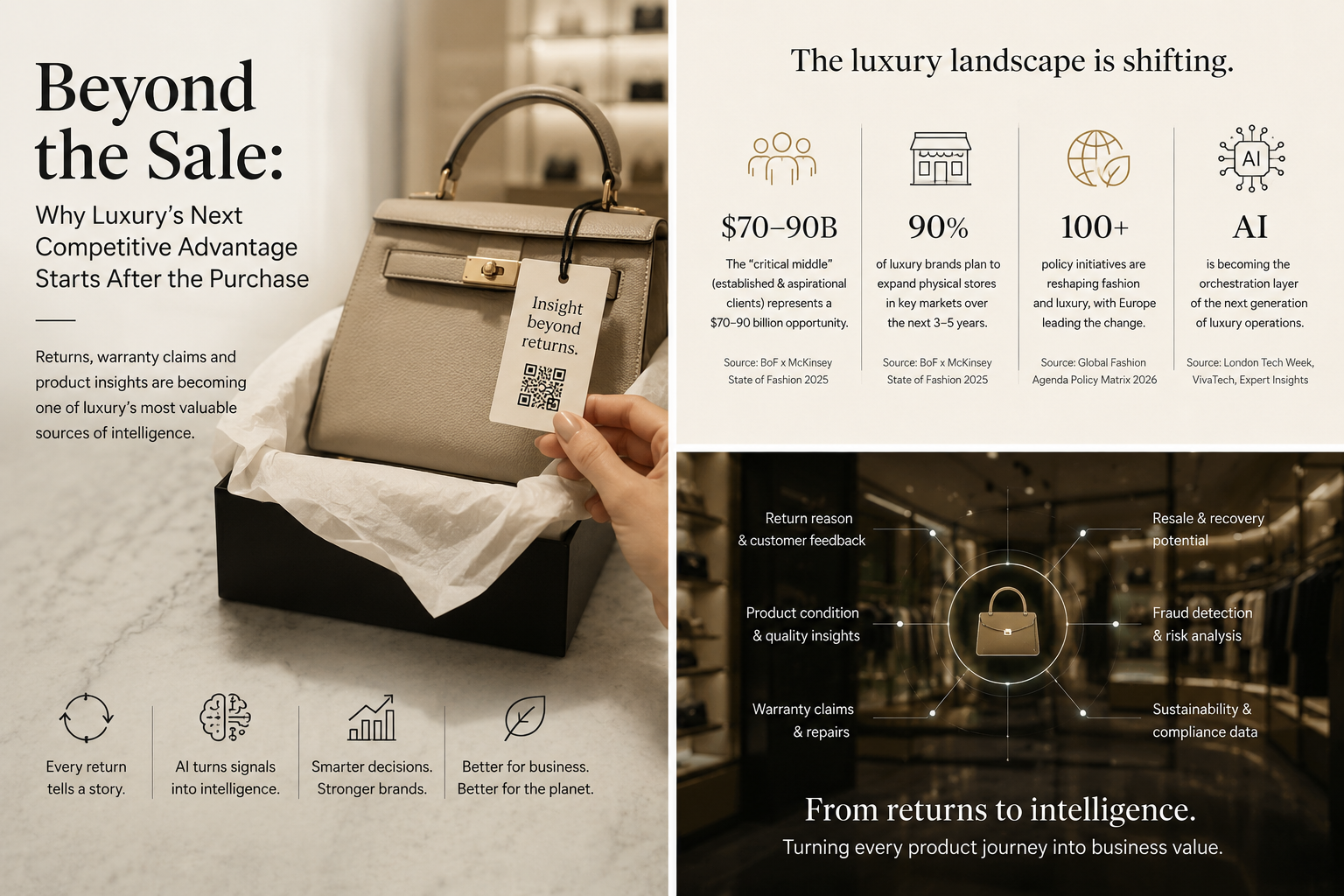
Over the last several months, the luxury industry has been asking increasingly difficult questions. Growth has slowed after years of exceptional performance, consumer behaviour is shifting, geopolitical uncertainty continues to affect demand, and brands are being forced to rethink how they create long-term value. Recent publications from The Business of Fashion, McKinsey & Company, Global Fashion Agenda, Fashion for Good, together with discussions led by experts including Ken Pucker, Lutz Walter, Patrick Frisk, and Victoria C.N. Scholz, all suggest that luxury is entering a fundamentally different operating environment. While each publication focuses on a different part of the value chain, they collectively describe an industry moving from growth optimisation toward operational resilience, customer intelligence, and lifecycle management.
One of the clearest signals comes from the latest Business of Fashion × McKinsey “State of Fashion: Face to Face With Luxury Clients” report. Rather than focusing exclusively on attracting new ultra-high-net-worth customers, the report argues that luxury brands should rebuild stronger relationships with what it describes as the “critical middle” — established and aspirational luxury consumers who together represent an estimated US$70–90 billion opportunity. According to the report, years of aggressive price increases have unintentionally weakened accessibility for many loyal customers, creating space for new expectations around service, experience, and perceived value. Future growth, therefore, is expected to rely less on simply selling more products and increasingly on strengthening customer relationships across the entire lifecycle.
The report also highlights how the physical role of luxury retail is changing. Flagship stores are evolving beyond traditional points of sale into immersive destinations that combine retail, hospitality, culture, gastronomy, education and community building. Examples such as Louis Vuitton’s “The Louis” flagship in Shanghai and ICICLE Garden illustrate how brands are investing in spaces that deepen emotional engagement rather than maximise immediate transactions. The message is clear: luxury is no longer competing only through products. It is competing through experiences, long-term relationships and differentiated service.
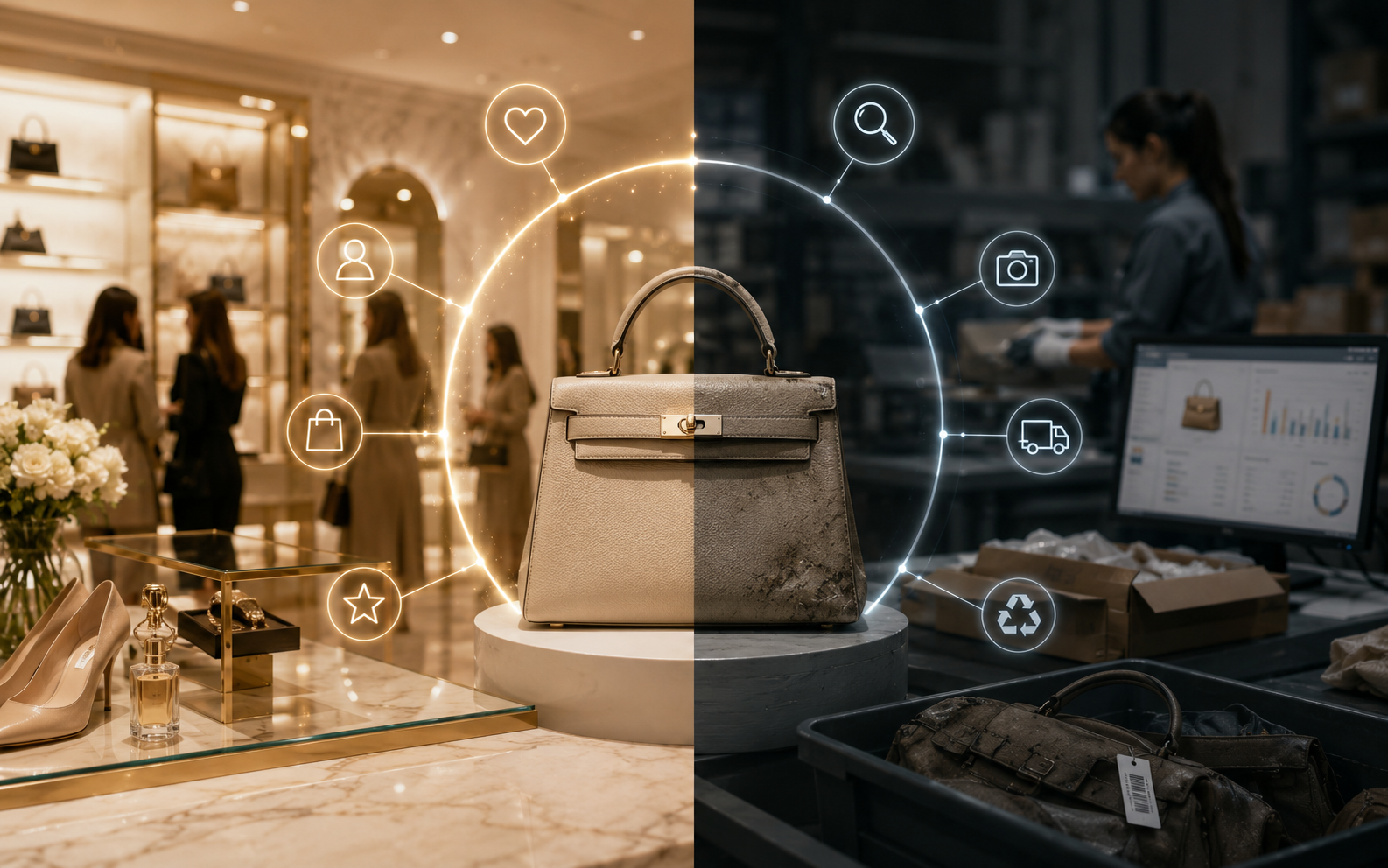
Yet customer experience is only one side of the transformation. Behind the scenes, the operational landscape is becoming equally complex. Across Europe, the fashion and luxury sectors are simultaneously adapting to the Ecodesign for Sustainable Products Regulation (ESPR), Digital Product Passports (DPP), expanding Extended Producer Responsibility (EPR) schemes, the Corporate Sustainability Reporting Directive (CSRD), new Green Claims legislation, revisions to the Waste Framework Directive, and mandatory textile collection requirements. As highlighted in the Global Fashion Agenda Policy Matrix, more than one hundred policy initiatives are now influencing how products are designed, manufactured, sold, repaired, collected, resold and recycled. Sustainability is therefore becoming embedded not only in brand communication but also in operational decision-making throughout the value chain.
At the same time, organisations such as Fashion for Good continue demonstrating how rapidly circular technologies are maturing. Programmes including Closing the Footwear Loop, Project Rewear, and Future Forward Factories are exploring fibre-to-fibre recycling, automated textile sorting, product redesign, circular manufacturing, and scalable recovery systems. One particularly striking statistic highlights the scale of the challenge: approximately 23–24 billion pairs of shoes are produced globally every year, while an estimated 90% still end up in landfill, incineration, or unmanaged waste streams due to the complexity of footwear construction and insufficient recovery infrastructure.
These initiatives show that technological solutions are progressing quickly, but they also reveal another recurring theme. Every circular process depends on accurate information about the product itself. Material composition, condition, authenticity, damage, previous usage and recovery potential increasingly determine which circular pathway is technically and economically viable.
Artificial intelligence is expected to accelerate many of these developments. Discussions across London Tech Week, Viva Technology Paris, and recent reports from Fashion for Good increasingly position AI as the orchestration layer capable of connecting manufacturing, logistics, compliance, customer service and circular operations. However, the success of AI depends less on model size than on data quality. Without structured information about returned products, warranty claims, customer feedback and product condition, even the most advanced AI systems remain limited in their ability to support operational decisions. In other words, artificial intelligence is only as valuable as the operational signals it receives.
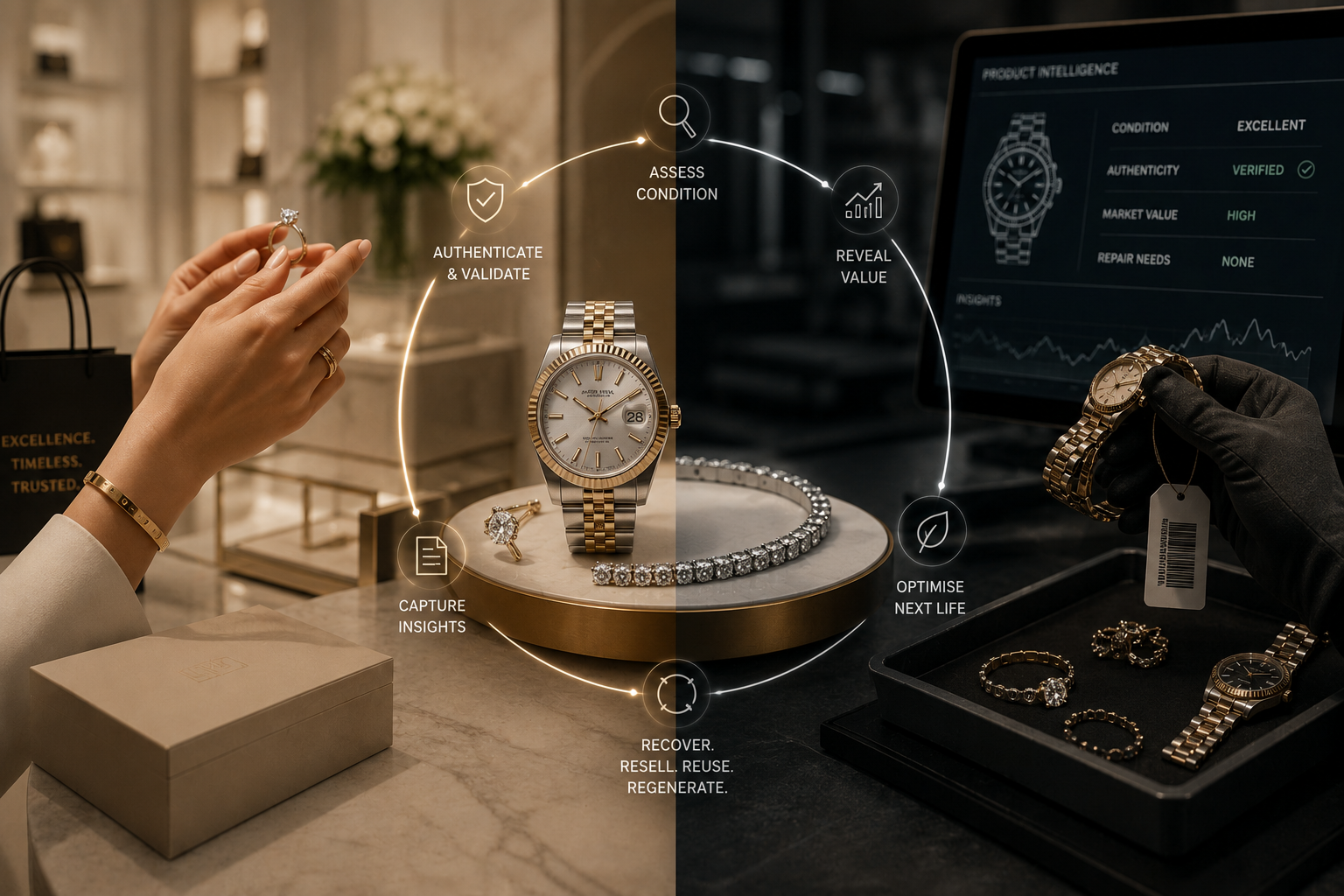
Looking across all these reports and initiatives, one observation repeatedly emerges. The industry has invested enormous resources into understanding how products should be designed, manufactured and sold. Comparatively little attention has been devoted to understanding products once they re-enter the value chain. Yet this is precisely where some of the richest commercial, operational and sustainability insights exist. Every return, warranty claim, repair request or quality assessment contains information about product durability, manufacturing consistency, customer expectations, resale potential, fraud risk and future product development. These signals influence not only reverse logistics but also future sourcing decisions, merchandising strategies, inventory planning and customer experience.
The Bigger Question
Reading these publications together left me with one overarching reflection.
Today’s conversation around fashion and luxury is still largely centred on products.
How they are designed? How they are manufactured? How they are marketed? How they are recycled?
Far less attention is given to how they are understood once they come back.
If Europe is serious about building a competitive circular economy, and if luxury brands are serious about strengthening customer relationships beyond the first transaction, then reverse logistics can no longer remain a back-office function. It needs to evolve into an intelligence layer connecting customer behaviour, operational excellence, compliance, sustainability and commercial performance.
To me, that is where one of the industry’s biggest opportunities lies.
The brands that lead the next decade may not simply be those producing better products.
They may be the ones learning more effectively from every product that returns.
Because ultimately, circularity is not only about keeping products in circulation.
It is about keeping knowledge in circulation.
Further reading & inspiration
This article draws on research and publications from The Business of Fashion, McKinsey & Company, Global Fashion Agenda, Fashion for Good, the European Environment Agency, and perspectives shared by Ken Pucker, Patrick Frisk, Lutz Walter, Victoria C.N. Scholz, and other leaders contributing to the future of fashion, luxury, AI, and circular supply chains.
Anna Warchalowska is CEO and co-founder of CIRQUEL. If you are a brand, investor or partner interested in circular fashion, sustainable returns, or commercial partnerships, we would love to connect at cirquel.co.